
BBC: Trust, Diversity, Royal Charter
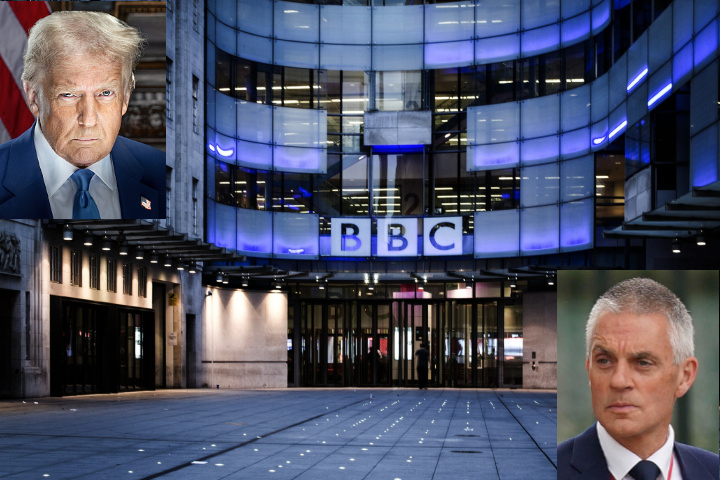
A disastrous BBC Panorama editing of US President Trump’s speech, has led to resignations of both the BBC director-general Tim Davie and head of BBC News Deborah Turness. President Trump said that the editing of his 6th January 2021 speech was “egregious” and “worse than the Kamala thing” (reference to a CBS dispute over an interview with Kamala Harris). The President also said, “The people of the UK are very angry about what happened, as you can imagine, because it shows the BBC is fake news”.
In the fallout, the BBC apologised to President Trump for “the mistaken impression that President Trump had made a direct call for violent action”in the 2024 Panorama programme [BBC apologises to Trump]. However, in defence of the programme, outgoing director-general Tim Davie said the BBC must “fight” for its journalism following a “tough few days”, and a further defence came from the current BBC chairman Dr Samir Shah, who insisted the corporation is not institutionally biased. In the wake of this appalling misrepresentation of President Trump’s speech, this article will reflect on the BBC’s recent history and upon the key issues of trust, diversity and the BBC Royal Charter.
From the 1990s through to 2010, Britain had a New Labour Government. During this period, it is widely recognised that there was considerable infiltration into the BBC by New Labour members and activists. These left-wing individuals sought to change the direction of the BBC by promoting ideology and counter cultures. Many people, at that time, further believed that New Labour had grasped the opportunity to use the BBC as a social engineering platform to achieve their political aims.
From 2007 to 2017, the BBC Trust was the governing body of the British Broadcasting Corporation. Prior to the formation of the BBC Trust the BBC was regulated by a Board of Governors, which had existed since 1927. However, for some considerable time even before the formation of the BBC Trust, there had been systemic management, editorial and complaint failures at the BBC. The UK political scandal in 2003 known as the “Gilligan affair” exposed these failures, and following the publication of the Hutton Inquiry report (2004) into Dr David Kelly’s death, both the BBC chairman Gavyn Davies and BBC director-general Greg Dyke resigned. The report had criticised journalistic practices, editorial systems and the BBC Board of Governors.
In 2010, I addressed a number of important BBC issues in my article ‘The BBC Trust’ published on former PM Boris Johnson’s democracy archives website. The article explored the role of the BBC Trust governing body and the importance of trust as a BBC core value. I emphasised the need for effective governance and the need for the BBC to address editorial failures, management, leadership and audience trust. I suggested, that in the long run, Public Service Broadcasting would be harmed if the issue of audience trust was not addressed. Furthermore, I flagged a warning that that if nothing was done there would be increasing left-wing politicisation of the BBC. By 2017, the BBC Trust had failed to live up to expectations, and was replaced by the BBC Board of Directors. The current chairman of the Board being Dr Samir Shah.
There has been much public disquiet about the strength of the BBC’s news reporting. In a world of fake news, dodgy dossiers, misrepresented and incomplete news, audiences are now becoming increasingly concerned about the truth. In an open democratic society, reporting the truth and impartiality goes to the very heart of broadcasting trust. The BBC must maintain the highest standards and values in keeping with core values, and which ultimately reflect on how the BBC is perceived across the globe.
The BBC had various internal diversity initiatives and strategies dating back to the 1990s and early 2000s, including a public purpose in the 2007 Royal Charter that read, “Representing the UK, its nations, regions and communities…”. The current Royal Charter (2017) provides that the BBC’s mission is “to act in the public interest, serving all audiences through the provision of impartial, high-quality and distinctive output and services which inform, educate and entertain”. It set set out five public purposes. However, It is ‘purpose 4.’ and emphasis on diversity that I believe is most concerning. The 2017 Charter review process explicitly enshrined a commitment to diversity in the Charter and the Framework Agreement, for the first time, as a specific requirement:
Purpose 4: To reflect, represent and serve the diverse communities of all of the United Kingdom’s nations and regions and, in doing so, support the creative economy across the United Kingdom.
The BBC should reflect the diversity of the United Kingdom both in its output and services…. BBC should accurately and authentically represent and portray the lives of the people of the United Kingdom today, and raise awareness of the different cultures and alternative viewpoints that make up its society….
I think that Purpose 4 was overly interpreted and gave carte blanche to director- general Tim Davie and not a few journalists, thus making diversity the main focus and plank of the charter purposes. Mr Davie clearly had a liberal socialist mission and his focus was to embed a culture of diversity throughout the BBC: embedding it in all aspects of broadcasting. Such a focus, I would argue has damaged its traditional core values and mission. Before his resignation, Mr Davie had been at the BBC for 20 years and has previously spoken about how proud he was to make the BBC thoroughly diverse, some might say hideously so. As a consequence, the focus on diversity and the rise of alternative views has led to biased reporting and failures in trust.
Exploring the issues of trust further. The promotion of diversity as a main the main policy plank has led to corporate division, fragmented values and a culture of individual interpretation of news, this along with failures of editorial control allowed wokeism and the rise of a counter-culture. BBC true core values have been desecrated on the altar of diversity and wokeism; meritocracy was out and counter-culture in, what could possibly go wrong? In achieving the BBC’s corporate mission and goals, social inclusion and social cohesion policies are considerably more important and fundamental than extreme pervasive diversity policies. Furthermore, the subversive nature of diversity policies and the diversity industry should not be underestimated. Emphasis on diversity has created division, compromised editorial integrity, marginalised BBC corporate culture and damaged the merit-based culture.
The BBC Royal Charter ends on the 31st December 2027. However, given the current level of uncertainty surrounding the future of the BBC and growing public concern, the Government needs to urgently clarify broadcasting policy and review the BBC Royal Charter now. The next director-general needs to urgently address these issues, and the chairman needs to take a more proactive approach to governance. Putting things right is no summer afternoon stroll along Portland Place for either the director-general or board chairman. The BBC must re-establish the highest standards and values in keeping with traditional core values. It must once again become a trusted mainstream broadcaster of international repute, which ultimately reflects on how British culture and democratic values are perceived around the world.
The extent to which the audiences feel its trust betrayed bodes ill for the BBC, and in the long-term the loser will be public service broadcasting (PSB). Whether or not the BBC is privatised the corporation is most certainly in choppy waters, and debate about the current BBC’s licence fee model will intensify – the future of PSB is at risk. A return to values that appeal to mainstream audiences is needed and that includes trust, integrity, cohesion and mainstream culture.
© 2025 Dr Robert Frew. All rights reserved